






Time has been the bane of more than a few Starfleet careers. That’s why The Federation has whole departments devoted to studying temporal mechanics. That’s why the various writers of Star Trek have clearly devoted a lot of energy to teasing out time’s subtle moods. Because before anyone begins tinkering with history, they would do well to understand how we interact with it. And one of the most significant ways of relating to the past is nostalgia. That’s true at least for Humans, and for Klingons singing their endless songs about legendary battles, though the jury is out on Vulcans or, say, sentimental Horta.
As a term, nostalgia derives from the Greek nostos, meaning homecoming, and algos, meaning grief or distress. It is a yearning for something which no longer exists or perhaps which has never existed, and, crucially, this desire is less spatial than temporal, often closely linked to childhood memories. It is a feeling which Star Trek has often dramatized (think about Annorax in Voyager’s “Year of Hell” who longs to restore an erased timeline containing his wife and… <dramatic flash> …wait, what do you mean you don’t remember him?!). But understanding nostalgia is not just useful for writers. Knowing more about how it is expressed can also help viewers and critics when contemplating our situationships with popular culture. Indeed, when we analyze what I like to call the flavor profiles of nostalgia we begin to account for why different audiences vibe differently with different incarnations of contemporary Trek.

Because nostalgia, as the old saying goes, is not what it used to be. Far from monolithic, it actually manifests in different guises with noticeable differences in meaning. To consider two recent and concurrent instances from our nostalgia-saturated era, Star Trek: Strange New Worlds and Star Trek: Starfleet Academy have fundamentally divergent approaches to nostalgia baked into their core premises. Arguably these distinct profiles are deliberate strategies designed to appeal to different demographics, and while that’s occasionally risky it’s not necessarily an unwise approach for any sprawling franchise to adopt. In the case of our two examples, we might divide them along lines suggested by the academic Svetlana Boym in The Future of Nostalgia (2001) as “restorative” nostalgia in the case of Strange New Worlds and “reflective” nostalgia in the case of Starfleet Academy (although, in both cases, fascinating strains of the contrary approach deepen and enrich the final results).
First, restorative nostalgia. For Boym, this involves a strong emphasis on so-called “truth and tradition,” a stance which Strange New Worlds emphasizes by positioning itself as the heir to classic Star Trek. Such an approach tends to be anchored in a particular historical moment (or, at least, in a recollection of that moment, for as Boym warns, there is always a risk of conflating “the actual home for the imaginary one”). Consider how Strange New Worlds treats the original Trek as a kind of sacred text, with the relationship between the old and new based not on evolution of the material but, instead, on Boym’s “transhistorical reconstruction of the lost home.” This is evidenced not just by SNW’s literal recreation of the original Enterprise (albeit much more spacious given Pike’s smaller crew complement) but by the recasting of franchise stalwarts such as Kirk, Spock, Uhura, Scotty, and Chapel. We further see it in the way the series retells classic stories, for instance how the first season finale, “A Quality of Mercy,” offers what is essentially a cover version of the TOS episode “Balance of Terror” by transporting Captain Pike forward in time from 2259 to 2266 while also sending the viewer nostalgically back in time from 2022 to 1966. Even the title Strange New Worlds is itself nostalgically (and restoratively) Trek, drawing as it does from the credits narration of the franchise heyday.
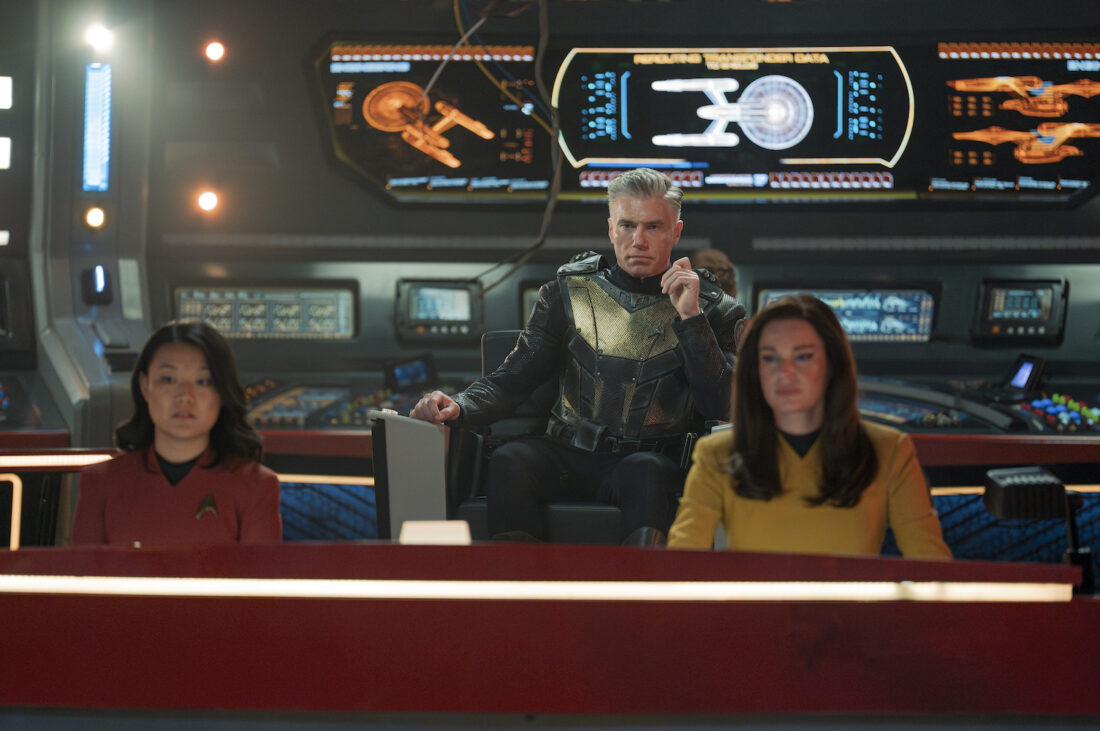
Boym calls this kind of nostalgia “anti-modern mythmaking” and attributes many small-c conservative characteristics to it such as a simple conception of good and evil (see for instance SNW’s portrayal of the malevolent Vezda in season three). The series further stresses Boym’s restorative “landscape of the romantic sublime” via the Western aesthetic of Captain Pike. For while he may be a starship handler by vocation, in his heart he is a horse wrangler proudly displaying the accoutrements (such as a saddle) of that lifestyle. Nonetheless, the most important influence here is probably structural insofar that restorative nostalgia suggests a closed history: by definition it struggles to move forward in genuinely transformative ways; by design its characters have a “shortage of time” for their adventures before The Original Series must take place (this is true of Pike in particular, trapped “on the threshold of past and future” after having learned his fate during Discovery, though one also worries about how La’an will ultimately be reconciled with canon; personally, I’m hoping she joins the TVA Department of Temporal Investigations). All of which is to say that the marketable identity of Strange New Worlds as a prequel to classic Star Trek and (more immediately than, say, Star Trek: Enterprise) is actively influenced by its creators’ restorative approach to nostalgia.
And yet, for all of that restorative energy, the flavor profile of Strange New Worlds acquires additional crunchiness from the likes of La’an, a character who has her own kind of science fictional anti-nostalgia going on, yearning less for her (admittedly horrific) childhood than hankering, Annorax style, for the lost timeline of “Tomorrow and Tomorrow and Tomorrow.” On top of this, the show confounds simple classification with a clear interest in gaps and discontinuities more closely associated with reflective nostalgia. This texture manifests in SNWs efforts to answer long-debated fan questions such as how Kirk and Spock first meet or what is the backstory of Chapel’s established relationship with Roger Korby.
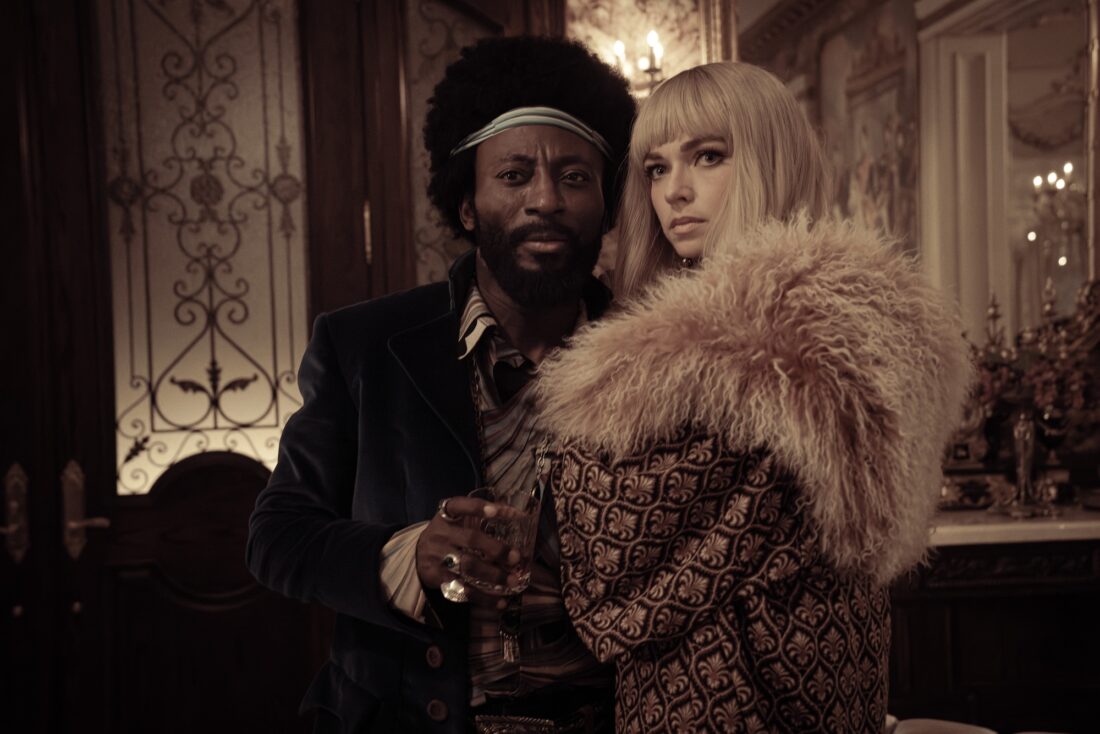
More multifaceted again is the show’s holodeck episode “A Space Adventure Hour.” This installment is doubly anchored in nostalgic recollection. It serves to reconstruct two pasts in the guise of a single futuristic tale by evoking a cheeky pastiche of not only the real-life 1960s television production context which birthed Star Trek to begin with but also, in an act of retroactive anticipation, appealing to viewers’ memories of the franchise’s various 1990s holodeck malfunction episodes. It is in fact an installment which can only exist in dialogue with how two different audience generations claim to remember classic incarnations of Star Trek.
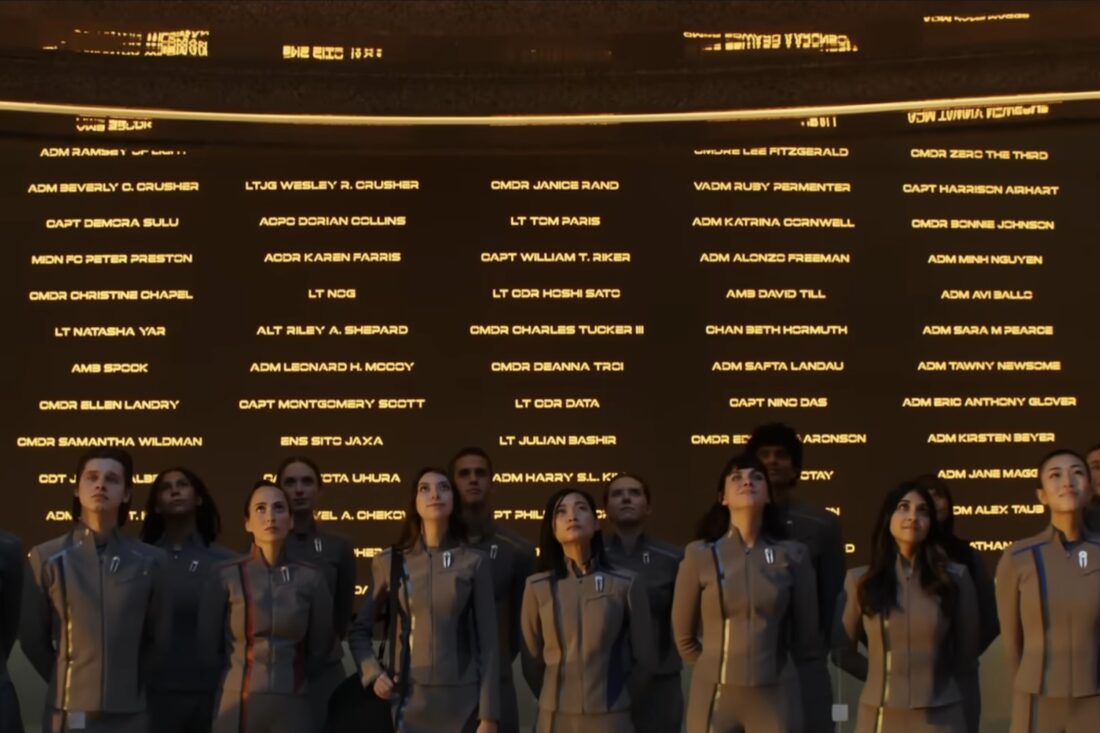
This kind of layered approach suggests a similar kind of “longing for continuity in a fragmented world” as that exhibited by genuinely reflective nostalgia. It is something that the post-Burn setting of our second example, Starfleet Academy, is designed to take narrative advantage of. Nine hundred years beyond Strange New Worlds, this period is a stage for “unrealized dreams of the past” (dovetailing neatly with the show’s use of hauntology as I have discussed on this site before). Starfleet Academy, so, is as undeniably nostalgic as Strange New Worlds, but while its reflective approach uses similar triggers to the restorative tendency, the series fashions these into very different results. Because reflective nostalgia thrives in the act of “longing itself.” It relishes ambiguities and contradictions (something we will sadly now not see in a mooted third or fourth season installment which would have had the holographic Doctor meet the copy of himself from Voyager’s “Living Witness”). Reflective nostalgia calls “truth” into question as several Academy episodes, notably “Series Acclimation Mil,” pointedly do. Most importantly, it acknowledges that remembrance is an “imperfect process” (which, as much as anything else, is the crux of Academy’s first season finale). Along the way it champions an open approach to history, one in which youth (personified by cadet Caleb) challenges authority while simultaneously being poised to create its own stories. This philosophy celebrates the past of Star Trek but still exhibits a strong longing to forge a new future—via a new ship, a new crew, and a transformed setting—all while honoring what has come before (most obviously in the USS Athena’s commemoration wall, something I hold to be an object lesson in imperfect recollection if only because I refuse to believe that Nog never advanced beyond lieutenant).
As the name implies, reflective nostalgia tends towards more thoughtful and, for that matter, inclusive perspectives on history. Crucially, it combines “longing and critical thinking” (Academy’s students are, after all, receiving a university-level education). It exhibits a willingness to engage with the contradictions which Boym sees in “individual and cultural memory.” It accepts that while things in the past might have been one way (I am deliberately not saying “better”), that does not mean they need to be recreated exactly as they were. With reflective nostalgia, the past—be that the in-universe past of The Federation or the real-world past of Star Trek as a franchise—serves as inspiration for creating something new and different, a flavor profile which, for fans who just want to see an Enterprise with a captain exploring space and getting into battles with aliens, can sometimes be challenging to accept. So while the series obviously trades on nostalgia for the Trek name, universe, and in many cases legacy characters, it justifies this with a nostalgia flavor consciously designed to combine acknowledgment of franchise history with an appeal to a different, younger, and arguably more progressive audience. Such a tendency savors “details and memorial signs” (again, think of the commemoration wall) and it “cherishes shattered fragments of memory” (as good a description of the post-Burn era as any). However, the critical distance which it allows for engenders “defamiliarization,” and this, as Boym says, “brings new stories.”
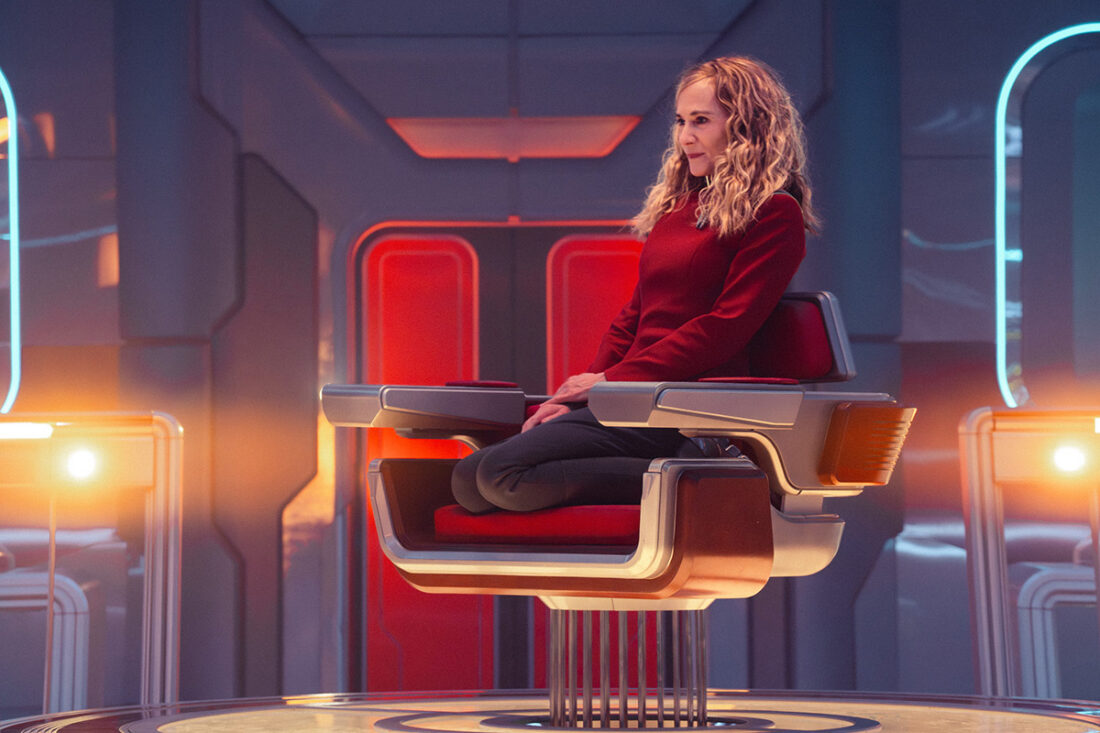
Because life after The Burn is complicated. The setting is about as far from the unhurried pastoral ideal of Captain Pike’s cabin as can be and its nostalgia profile signals this. Academy’s backdrop is consequently urban. Its immediate setting is aboard a vast starship whose reconfigurable spaces defy any notion of certainty or permanence even as programmable matter and holographic technology make temporary recreations (like that of the Sisko museum) accessible to all for the purposes of research or contemplation. The show’s Captain Ake, in contrast to her illustrious if straightforward predecessor, surrounds herself with the trappings of complicated history via her library of paper books, itself a nostalgic affection in the 32nd century. Scarred by personal loss during The Burn, the often irreverent Ake personifies reflective nostalgia’s “labor of grief” through “pondering pain and through play that points to the future.” It’s not an easy relationship to have with history. It’s actually hard work! Though, as a long-lived half Lanthanite, Ake does seem to enjoy what Boym terms a “sensual delight in the texture of time.”
And yet, much as Strange New Worlds contains grains of reflective nostalgia within a primarily restorative profile, the reflective Starfleet Academy finds its own counter tendency in cadet Caleb, who at first seems to be the personification of restorative nostalgia (because, yes, even young people can feel nostalgic). He is introduced with an obsessive pining for his childhood and he is defined throughout the early episodes by his quest to reestablish his previous life. Nonetheless, after a first season of actively questioning the person he is and how he came to be, Caleb learns to redirect his nostalgic urges into something more constructive. In the process, his restorative worldview begins to align with Academy’s reflective sensibilities as he discovers what Boym calls “new flexibility, not the reestablishment of stasis.” As such his journey comes to neatly embody the philosophy at the core of that series.
Now, while it is important to keep in mind that Boym’s reflective and restorative nostalgias are “tendencies” rather than “types,” her ideas do open up useful conversations about contemporary popular culture. This is especially true when we consider how nostalgia frequently manifests as an expression of identity, as an articulation of loss, and even as a “defense mechanism” in a time of upheaval. In the case of contemporary Star Trek, we can see how differing approaches to nostalgia dynamically shape each series and, consequently, how this influences their ongoing reception. Because that’s the other thing about nostalgia being an aspect of our relationship with time: it’s never fixed. Today we might debate the degree to which Strange New Worlds or Starfleet Academy do or do not satisfy our affection for the franchise as we remember it from our childhoods, but as for tomorrow (and tomorrow and tomorrow!)? Well… I have no doubt that fans returning to Star Trek ten, twenty, or thirty years down the line will yet be as nostalgic for these shows as we are for their legendary forerunners.

Honestly, this kind of navelgazing, both in all forms of entertainment and in all branches of criticism about it, is my biggest problem with contemporary culture. Like many people, I’m nostalgic for much of my past and the things that made me happy then. Many of those things I keep with me but only as artifacts that can still make me happy in small doses but I keep them in their rightful place. I don’t want them in a modern, reimagined context. I seek out new ideas and new things. It makes life so much more rewarding.
I’m not going to play with jargon, because I don’t know all of it, but I think this article is missing a third kind of nostalgia:
Nostalgia for a time when the future looked optimistic. When hope for a better future didn’t feel naive.
I would argue that all Star Trek, even the 32nd century stuff, offer optimism andhope for a better future.
One problem is a lot of people see the 24th century era as a whole as some perfect utopia where all the problems are solved, but that in itself is a look through nostalgic eyes.
At the end of the first season, we see the return of the Romulans and in early season 2 we see the Federation fast-tracking starbases along the Romulan border to show the flag. And that’s even before the Borg come into the picture. Honestly, I could accept Picard’s conceit that Starfleet wasn’t a military organization before season one, but the introduction to the Borg changed everything for the Federation, bringing more focus to weapons and defense and exploration. The Battle of Wolf 359 accelerated that even more.
DS9 openly challenged the whole Utopia setting for the Federation and took our characters in Starfleet to some pretty dark places. But at the end of the day, the stories ended with a note of hope and optimism.
It’s no different with 32nd century Trek, which starts off with the Federation at a low point and a dark place. But the stories are still about growth and rebirth and rebuilding in the face of that darkness, which is optimism defined.
This is especially true in the case of Starfleet Academy. Right up front they state that, yeah we made some mistakes that our younger generation are going to have to fix (relevance alert!), so let’s make sure they are prepared to lead the way to the future. Optimism.
And I maintain that telling the story of rebuilding Utopia is much more compelling than the telling the story of looking out your window and saying, “look at our nice Utopia”.